

 5809 Reads
 11 mins




For most homeowners, the appeal of rooftop solar begins with one simple question. How much can it actually reduce the electricity bill?
A 2026 study by the Council on Energy, Environment and Water (CEEW) gives a clear answer. After surveying 17,094 households across 21 states and one Union Territory, it found that rooftop solar adopters reported an average 71% reduction in their electricity bills. More than 90% of adopters were satisfied with their bill savings.
And that saving is only the beginning.
Source: CEEW Study on what drives rooftop solar installation decisions in Indian homes
A well-designed residential rooftop solar system can continue generating electricity for more than 25 years, reduce the amount of power a household buys from the grid, use available rooftop space, and lower the carbon emissions associated with household electricity consumption.
The best part? Eligible homeowners can also reduce their upfront investment through the PM Surya Ghar Muft Bijli Yojana government subsidy.
This guide explains the major benefits of residential solar power panels for Indian homes in 2026.
What Are the Benefits of Residential Solar Panels?
The main benefits of residential solar include lower electricity bills, long-term savings, government subsidy, value from surplus solar generation, lower dependence on grid electricity, productive use of rooftop space, long operating life, and lower emissions from household electricity use.
Let’s dig into the details of each of these benefits, along with real case studies and savings data.
#1. Residential Solar Panels Can Reduce Your Electricity Bills by up to 90%
A residential solar system generates electricity on your rooftop and supplies it to your home. Every usable unit of solar electricity consumed at home reduces the amount of electricity purchased from the grid.
This is the benefit homeowners appear to value most.
- In the 2026 CEEW study, 81% of households willing to install rooftop solar cited lower electricity bills as their primary motivation.
- Existing adopters reported an average bill reduction of around 71%.
Source: CEEW Press Release on the 2026 Rooftop Solar study
In fact, many of SolarSquare’s own consumers report a bill reduction of up to 90%.
The actual savings from rooftop solar for a particular home, however, depend on factors such as:
- Solar system capacity
- Household electricity consumption
- Solar generation at the location
- Daytime electricity consumption
- Electricity tariff
- Applicable net-metering or billing arrangement
- Fixed charges on the electricity bill
#2. Residential Solar Power Can Deliver Long-Term Savings
The reduction in your monthly bill is the immediate financial benefit. The greater advantage becomes apparent over time as the same rooftop PV (photovoltaic) system continues to produce free electricity year after year.
Long-term savings, however, are not simply the total electricity generated multiplied by today’s tariff. They depend on the initial system cost, generation over time, module degradation, maintenance, future hikes in electricity tariffs, household consumption, and any future component replacement.
For context, here’s a snapshot of total savings you can receive from a rooftop solar system in Nagpur over 25 years:
Solar System Size | *Approximate Savings From Solar in Nagpur With SolarSquare Over 25 Years |
2 kW | ~₹13 lakh |
3 kW | ~₹19.51 lakh |
4 kW | ~₹26.02 lakh |
5 kW | ~₹40.23 lakh |
10 kW | ~₹80.46 lakh |
*Please note: While calculating savings, we have considered an annual tariff escalation of 3% and an annual plant degradation rate of 1%. The actual final savings from rooftop solar installation depend on your city, the type of solar panels you’ve installed and their efficiency, intensity of sunlight your rooftop receives, orientation of the panels and tilt angle, the pollution level and weather conditions in your city, the temperature, shadow on the roof, impact of dirt/dust, and how well you maintain your panels after installation.
You can also use SolarSquare’s free solar ROI calculator to find the estimated solar savings over 25 years in your city from rooftop solar.
#3. Government Subsidy Can Reduce the Upfront Cost
One of the major financial benefits of solar power for residential homes in India is the Central Financial Assistance (CFA) available to eligible residential consumers under the PM Surya Ghar Muft Bijli Yojana.
Under the current subsidy structure, eligible residential rooftop systems can receive the following financial assistance:
Solar System Size | Solar Subsidy Under the PM Surya Ghar Muft Bijli Yojana |
1 kWp | ₹30,000 |
2 kWp | ₹60,000 |
3 kWp or higher | ₹78,000 |
The subsidy is ₹30,000 per kW for the first 2 kW, and ₹18,000 per kW for the additional capacity up to 3 kW. No additional central subsidy is provided for capacities beyond 3 kW, and the subsidy is capped at ₹78,000. This lowers the effective investment required from an eligible homeowner and can improve the overall economics of going solar.
#4. Surplus Solar Power Can Create Additional Value
A grid-connected residential solar system can sometimes generate more electricity than the home is using at that moment. Instead of letting this surplus electricity go unused, it can be exported to the grid in accordance with applicable DISCOM (distribution company) and state regulations.
The financial treatment of exported electricity depends on the metering and settlement mechanism applicable in your location. This may include net metering, net billing, or another approved arrangement.
The benefit is already visible at scale. The government reported in August 2026 that more than 12 lakh households together earned ₹421 crore from surplus electricity supplied to the grid during FY 2024-25.
Source: Press Information Bureau (PIB), Ministry of New and Renewable Energy, Government of India
#5. Solar Reduces Your Exposure to Electricity Tariff Increases
A grid-only home has no option but to purchase all of its electricity at the prevailing electricity tariff. A home with solar, on the other hand, can generate a major portion of electricity on its own roof.
As a result, future tariff increases will affect a smaller share of the household’s total electricity consumption.
This does not mean rooftop solar permanently fixes your electricity costs. Grid purchases and certain fixed charges may remain. But you are immune to the 3-6% annual tariff hikes that periodically happen in most Indian cities.
#6. Residential Solar Reduces Dependence on Purchased Grid Electricity
One of the practical benefits of solar panels in homes is their ability to generate electricity on-site, where it is consumed. This reduces the amount of electricity that needs to be purchased from the grid.
It is important, however, to distinguish lower grid dependence from complete energy independence.
- A normal on-grid solar system remains connected to the electricity grid. During a grid outage, it shuts down for anti-islanding safety and does not provide backup electricity.
- A well-designed hybrid solar system with battery storage can provide backup power for selected loads during outages.
- An off-grid solar system can operate independently of the grid but requires batteries and a different system design.
Residential solar therefore reduces grid dependence, while the level of independence depends on the type of solar system installed.
#7. Solar Makes Productive Use of Available Rooftop Space
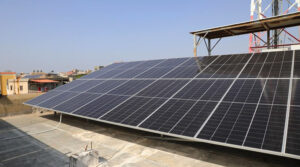
Residential rooftop solar turns a suitable roof area into an electricity-generating space without requiring the homeowner to buy separate land to install the solar PV system.
This is particularly valuable for independent homes with sufficient shadow-free roof area.
Domestic solar panels can be installed above an existing roof while leaving appropriate access for maintenance and other requirements. However, the entire terrace cannot automatically be treated as suitable for solar installation.
Water tanks, neighboring buildings, trees, structural limitations, access pathways, and shadows can reduce the available roof area for solar panel installation.
#8. Rooftop Solar Systems Have a Long Life With Low Routine Upkeep
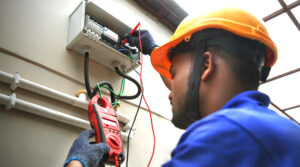
Solar PV systems can generate electricity for decades without requiring fuel or complex daily operation. Upkeep generally involves professionals cleaning the modules, monitoring generation, and periodically inspecting electrical and structural components.
A 2026 CEEW study on residential rooftop solar maintenance recommends regular cleaning to remove dust, dirt and bird droppings, periodic system inspection, and professional assistance when a drop in performance or an electrical fault is observed.
Source: CEEW study on maximizing rooftop solar performance by enabling a robust O&M ecosystem
A professionally maintained rooftop solar system can combine a long operating life with relatively manageable routine upkeep.
#9. Residential Solar Power Systems Lower Carbon Emissions
Solar panels generate electricity from sunlight without burning fuel or producing carbon dioxide emissions. When rooftop solar replaces a portion of electricity that would otherwise come from the grid, it directly reduces the emissions associated with household electricity consumption.
Here’s a snapshot of just how much you can contribute to clear air by simply installing rooftop solar at your home:
Rooftop Solar System Size | Equal to Planting How Many Trees? | Carbon Offset Over 25 Years |
2 kW | 78 | ~52,000 kg |
3 kW | 118 | ~78,000 kg |
4 kW | 157 | ~1.04 lakh kg |
5 kW | 196 | ~1.30 lakh kg |
10 kW | 392 | ~2.59 lakh kg |
Can you imagine the cumulative effect on climate when millions of homes adopt solar?
The Government of India estimates that installing rooftop solar across one crore households under the PM Surya Ghar Muft Bijli Yojana could generate 1 lakh crore units of renewable electricity and avoid ~720 million tonnes of CO₂-equivalent emissions over 25 years.
Source: Press Information Bureau: India’s Energy Landscape, 22 June 2025
Are Residential Solar Panels Worth It for Indian Homes?
With electricity tariffs increasing by 3-6% annually, residential solar panels are proving to be a financially worthwhile decision for homeowners with a suitable roof and sufficient electricity consumption. What makes 2026 the best time to go solar is the availability of the PM Surya Ghar Muft Bijli Yojana. This central financial assistance will only be offered until the government solarizes 1 crore homes under the scheme by March 31st 2027.
A correctly sized and well-installed system can convert your rooftop into a long-term source of clean electricity and reduce the amount of power you must buy from the grid. If it’s the upfront installation cost that’s making you second-guess your decision, you now have the option to avail a rooftop solar loan from banks and NBFCs.
The extent of benefit from residential solar power systems, however, depends on choosing the correct system size based on your electricity consumption. SolarSquare can help you with this. We will assess your rooftop, recommend the appropriate system size, and help you understand the expected generation, subsidy, and savings before installation.
Book a free solar consultation with our experts to learn how residential solar can benefit your home.
Frequently Asked Questions
What are the disadvantages of solar power?
The main limitation of residential solar is the upfront investment. However, the solar subsidy has substantially lowered installation costs. Besides, many banks and NBFCs offer solar loans.
What happens after 25 years of solar panels?
Solar panels do not stop working after 25 years. They gradually lose some generating capacity over time and can continue producing electricity beyond this period if they remain in good condition.
How long do residential solar panels last?
With proper maintenance and cleaning, a tier-1 latest-technology panel, such as a TOPCon (Tunnel Oxide Passivated Contact) module, can last for 25-30 years.
Do solar panels need maintenance or servicing?
Yes, domestic solar panels require maintenance & servicing just like your cars, although routine requirements are relatively low. Panels should be cleaned periodically to remove dust and debris, while generation, wiring, electrical connections, and mounting structures should be checked regularly. The required cleaning frequency depends on dust, rainfall, and site conditions.
Can residential solar panels make your electricity bill zero?
A zero electricity bill can be possible for some households or billing periods when solar generation and applicable credits sufficiently offset consumption. However, it is not guaranteed. Fixed charges, electricity use, solar generation, and state or DISCOM billing rules can affect the final bill.
Do residential solar panels work during a power cut?
A standard on-grid residential solar system shuts down during a grid outage for safety and does not provide backup. A properly configured hybrid solar system with battery storage, however, can supply power to selected household loads during an outage.
What are the environmental benefits of solar panels in homes?
Residential solar generates electricity without burning fuel or producing direct carbon dioxide emissions during operation. By replacing part of the electricity a home would otherwise draw from the grid, solar can reduce the emissions associated with household electricity consumption.
Does residential solar protect against rising electricity tariffs?
Yes. Residential solar protects your household from rising electricity tariffs by replacing a large share of costly grid electricity with power generated on your rooftop. A properly sized system can reduce electricity bills by up to 90%, although fixed meter charges will still apply.


 Previous Article
 ![10 kW Solar Panel Price in India [With and Without a Subsidy]](https://cdn.solarsquare.in/blog/wp-content/uploads/2025/07/18165650/10-KW-solar-panel-300x167.webp)
 9 min
9 min