
 13058 Reads
 22 mins


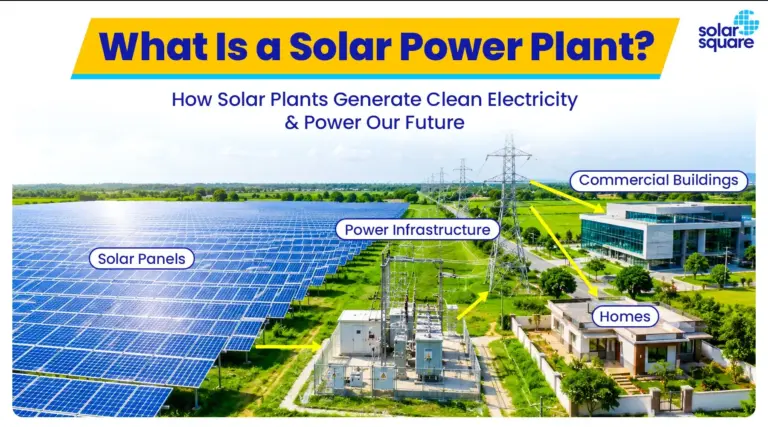
Did you know that businesses and industries can reduce their electricity costs by up to 70% by installing a solar power plant? These PV systems use sunlight to generate electricity for buildings, industrial operations, or the power grid, helping users replace a large share of the electricity they would otherwise purchase from a utility.
A solar power plant is a solar energy system that uses sunlight to generate electricity in two ways.
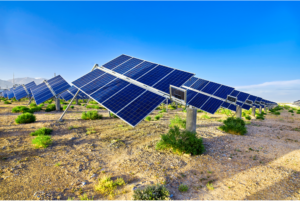
- Solar PV power plants, also called solar cell power plants: They use PV panels to convert sunlight directly into electricity. They’re subdivided into three types, i.e., on-grid solar power plants, off-grid solar power plants, and hybrid solar power plants.
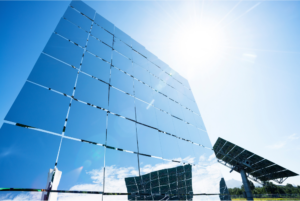
- Concentrated solar power plants, also called solar thermal power plants: They use mirrors and lenses to concentrate sunlight onto a single area, collect thermal energy to generate steam, and use the steam to rotate turbines to produce electricity. These are further classified into parabolic trough collectors, solar power towers, linear Fresnel reflectors, and dish Stirling systems..
Of the two types of solar plants listed above, solar PV power plants are cheaper, simpler to install, and easier to maintain. This makes them the most preferred technology for installing rooftop solar on homes, housing societies, and commercial buildings, as well as for large ground-mounted Saur Urja plants.
In this guide, we’ve explained both the types, the components and working of a solar power plant, the cost of residential and commercial system plants in India, and the ROI you can expect over 25 years.
TL;DR Summary Box
Here are the main topics and solar plant details covered in this blog in detail:
| Main Topics/Solar Plant Information | Quick Takeaways |
| Solar power plant definition | A solar power plant is a solar energy system that uses sunlight to produce electricity, either through solar PV panels or concentrated solar power technology. |
| What are the types of solar power plants? | Solar PV (photovoltaic) power plants and concentrated solar (thermal) power plants. |
| What are the types of solar PV plants? | On-grid solar systems, off-grid solar systems, and hybrid solar systems |
| Solar power plant information: What are the main components? | Solar panels, mounting structure, combiner box, solar inverter, transformer, net meter, batteries (optional), and a monitoring system. |
| How does a solar PV plant work? | Solar panels absorb sunlight and use the photovoltaic effect to convert it directly into electricity. |
| How does a concentrated solar power plant work? | Many mirrors or lenses collect sunlight and focus it onto a receiver that heats up. The heat is used to generate steam, which moves a turbine to produce electricity. |
| Does the government offer any subsidy on solar plants? | Yes, the government offers a subsidy to homeowners and housing societies installing grid-tied rooftop solar systems. |
| What does a residential rooftop plant cost in India? | It depends on multiple factors such as DISCOM charges, city, product variant opted for, panel type, inverter type, mounting structure height, type of after-sales service, savings guarantee, roof height, etc. |
| What does a commercial solar power plant cost? | A commercial solar power plant costs between ~Rs. 30,000* per kW and ~Rs. 50,000* per kW. |
*Please note: The final solar panel cost for commercial PV systems can vary based on the type of solar panels you use (imported and DCR solar panels have a cost variation of ~15%), type of solar inverter you choose (string inverters and optimizers have a cost variation of ~10-15%), type of solar industrial system, whether or not you use a battery energy storage system (it increases the final cost by almost 30%), mounting structure height, type of after-sales service, roof height, etc.
What is a Solar Power Plant?
A solar power plant, also known as a solar electric plant, is a solar energy system that uses sunlight to produce electricity. Based on the way it generates electricity, it is classified into the following two types:
- Solar PV power plants or solar cell power plants
- Concentrated solar power (CSP) plants or solar thermal power plants
Of the two, solar PV power plants are cheaper and easier to maintain. This is why they are the most preferred technology for rooftop solar on housing societies, commercial and industrial buildings, and homes.
What Are the Components of a PV Solar Power Plant?
A solar PV power plant consists of a chain of components that work together to convert sunlight into usable electricity and deliver it to your appliances or the grid.
Here’s what each part in this type of solar power plant does.
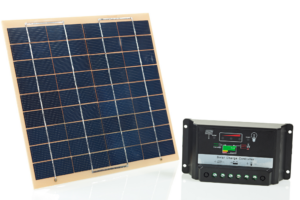
- Solar panels (PV modules): These consist of solar cells that absorb sunlight and convert it into direct current (DC) electricity via the photovoltaic effect.
- Mounting structure: This holds the panels at the right angle and orientation on a rooftop or on the ground so they capture the most sunlight and stay secure against wind.
- Combiner box: This collects the output from several panel strings into a single line and adds protection devices, reducing wiring clutter and improving safety.
- Solar inverter: This converts the DC electricity from the panels into alternating current (AC), the form of electricity used in homes and commercial buildings.
- Transformer: In larger, commercial solar power plants, a transformer steps up the voltage so the electricity can be fed into the grid efficiently.
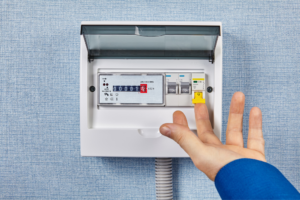
- Bi-directional net meter: In on-grid solar system plants, this net meter measures both the electricity you send to the grid and the electricity you draw from it, which is what makes net metering possible.
- Battery bank (optional): Off-grid and hybrid solar plant types add lithium batteries to store surplus electricity for use at night or during power cuts.
- Monitoring system: It tracks generation, panel health, and inverter performance so faults are caught early and output stays high.
How Does a Solar PV Power Plant Work?
A solar cell power plant consists of solar panels that absorb sunlight and directly convert it into electricity through multiple components that are part of the solar system.
Here are the simple steps that explain the solar power plant working process:
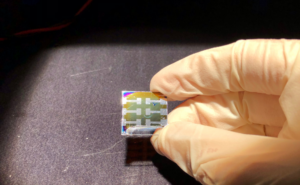
- Step 1 – Sunlight falls on solar panels: Solar panels are made of solar cells. These solar cells absorb photons present in the sunlight.
- Step 2 – Photons excite electrons in the solar cells: Photons transfer their energy to electrons, causing them to leave their positions and move. The place they leave behind is called a hole, which is positively charged.
- Step 3 – The built-in electric field ensures electrons and holes do not immediately recombine: The cell’s internal electric field at the p-n junction pushes electrons and holes in opposite directions.
- Step 4 – Electrons always flow in one direction: The flow of electrons is what’s known as DC power.
- Step 5 – The DC power is taken to a solar inverter: The solar inverter converts direct current into alternating current so it can power appliances at home.
- Step 6A – A bi-directional meter allows electricity to flow between the grid and the solar system: Any excess electricity is transferred to the utility grid through the net meter in an on-grid solar system. At night, the net meter imports electricity to keep the loads running.
- Step 6B – The solar inverter charges the lithium battery bank: In off-grid and hybrid solar systems, the excess electricity charges the lithium batteries, which can supply power at night or during power outages to keep the load running.
What Are the Types of Solar Power Plants?
Solar power plants are classified first by the technology they use to convert sunlight into electricity. There are two technologies, i.e., solar photovoltaic (PV) and concentrated solar power (CSP). Solar PV plants are then further divided by their system type into on-grid, off-grid, and hybrid systems.
Let’s explore all the solar plant types in detail.
#1. Solar PV Power Plant or Solar Cell Power Plant
As already explained, a solar PV power plant, also called a solar cell power plant or solar photovoltaic power plant, uses solar panels to convert sunlight directly into electricity through the photovoltaic effect.
This technology is used in almost all rooftop solar systems at homes, and commercial buildings, and in most modern ground-mounted solar power plants because it is affordable, reliable, and easy to maintain.
These PV solar power plant types are further divided into the following categories:
- On-grid solar power plant: This system is connected to the main power grid and uses a bi-directional net meter. During the day, surplus electricity is sent to the grid, and at night, electricity is drawn back from the grid to run the load. It does not use batteries, which makes it the cheapest and lowest-maintenance option.
- Off-grid solar power plant: This standalone system is not connected to the grid and instead stores electricity in a lithium battery bank. Stored energy runs the load at night or during outages. It suits remote locations with a weak or absent grid supply.
- Hybrid solar power plant: This system connects to both the grid and a battery bank. Surplus electricity first charges the batteries, and anything left over goes to the grid. Stored energy runs the load during outages, which suits users who need backup for sensitive operations.
Now, the real question is, on-grid vs off-grid vs hybrid, which is the three you should choose?
Here’s a side-by-side comparison of all three types to help you identify the type of solar plant that’s perfect for your situation:
| Feature | On-Grid Solar Plant | Off-Grid Solar Plant | Hybrid Solar Plant |
| Is it connected to the grid? | Yes | No | Yes |
| Does it have batteries? | No | Yes | Yes |
| Main components | Solar panels, utility grid, solar inverter, solar mounting structures, bi-directional net meter, and solar accessories. | Solar panels, battery bank, solar inverter, solar mounting structures, and solar accessories. | Solar panels, utility grid, battery bank, solar inverter, solar mounting structures, bi-directional net meter, and solar accessories. |
| Installation complexity | Very low, as it does not include batteries | High, as it includes batteries | Highest, as it includes both batteries and the grid |
| Installation cost | Cheapest of the three types | Higher than on-grid solar systems | Highest of the three types |
| Does the government offer a subsidy? | Yes. It’s offered to homeowners and housing societies installing on-grid rooftop solar systems. | No | Yes |
| Does it provide power backup during outages? | No. As soon as the grid shuts down, the solar system stops supplying power. This is a safety feature that’s called anti-islanding. It ensures that linemen repairing faulty wires don’t get electrocuted. | Yes. As long as the battery has energy stored, it will give power. This means investing more in larger batteries. | Yes. As long as the battery has energy stored, it will give power. This means investing more in larger batteries. |
| Best for | Homes, housing societies, and commercial buildings in urban areas with a reliable grid connection. | Remote locations with a very unreliable grid supply or no grid connection at all | Industries that require power backup for sensitive operations |
#2. Concentrated Solar Power Plant or Solar Thermal Power Plant
A concentrated solar power plant, also called a solar thermal power plant, generates electricity from heat rather than directly from light.
- It uses mirrors or lenses to focus sunlight onto a small receiver, which becomes very hot.
- A heat-transfer fluid absorbs this heat and is used to produce steam, which spins a turbine connected to a generator that produces electricity.
Because it requires large, open land and strong, direct sunlight, this technology is used for utility-scale solar power plants rather than rooftops.
Here are the main types of solar thermal power plants, based on the collector they use:
- Parabolic trough: These are long and curved mirrors that focus sunlight onto a tube that runs along the mirror’s center. A heat-carrying fluid flows inside the tube and gets very hot. That hot fluid later makes steam to drive a turbine.
- Power tower, also known as a central receiver: In this CSP plant, thousands of flat mirrors, called heliostats, track the Sun and focus light onto a receiver at the top of a tall tower. The receiver heats molten salt or another fluid. The stored heat then makes steam and power.
- Linear Fresnel: In this setup, many flat, narrow mirrors are arranged close to the ground. Light from those mirrors is concentrated onto a fixed receiver tube that’s kept directly above those mirrors.
- Dish Stirling: This CSP plant uses a dish-shaped mirror to focus sunlight onto a small engine positioned at the focal point. The heat runs a Stirling engine to produce electricity.
Solar PV Power Plant or a Concentrated Solar Power Plant, Which is Better?
A solar PV power plant is more cost-effective and easier to install and maintain than a concentrated solar power plant. In fact, the former can also be installed on rooftops, saving a lot of land area when required. But concentrated solar power plants can’t be installed on rooftops.
Let’s explore the key differences between the two types to help you understand why PV technology is superior when it comes to converting solar radiation into electricity.
| Feature | Solar Photovoltaic Power Plant | Concentrated Solar Power Plant |
| How does it work? | High-efficiency solar panels directly turn sunlight into electricity. | Mirrors/lenses concentrate sunlight to make heat. This heat then makes steam that’s used to run turbines to produce electricity. |
| Setup | It’s easy to install and works as rooftop solar systems and big solar power plants on land. | It’s a very complex setup that requires large areas of open land. |
| Cost | Cheaper to install and maintain than CSP plants. | Very expensive to install and maintain. |
| Space requirement | Can be easily fitted on rooftops. | Needs open land and very strong sunlight to work. |
| Where is it most commonly used? | Can be used in big solar farms in deserts. | |
| Popularity | Extremely popular amongst homeowners, housing societies, and commercial offices and industries. | Not very commonly used. |
Rooftop Solar Systems vs Ground-Mounted Solar Plants
Solar PV plants can also be grouped by where they are installed. Rooftop solar systems are mounted on the roofs of homes, housing societies, offices, and industries. Ground-mounted solar plants, on the other hand, are installed on open land and are usually built at a much larger scale.
Let’s check out how the two differ and why rooftop solar power plants are the most preferred solar PV systems:
| Feature | Rooftop Solar Power Plant | Ground-Mounted Solar Plant |
| Where is it installed? | On the roof of houses, apartments, offices, or factories | On empty land or large fields |
| Space needed |
| Needs big plots of land that are often away from cities |
| Cost of setup | Lower cost makes them affordable for homes and businesses | Higher cost makes them useful only for large-scale power plants for utility companies |
| Best for | Homes, housing societies, commercial and industrial buildings | Utility companies |
| Maintenance | Easy to clean and maintain since solar panels are present on roof | Harder to maintain because panels are spread out over acres of land |
| Government subsidy | Available to homeowners and housing societies installing on-grid rooftop solar systems | Not available |
Commercial and Utility-Scale Solar Power Plants
Beyond homes, businesses and industries can cut their electricity costs by up to 70% by installing much larger solar power plants on their roofs.
- A commercial solar power plant is usually built on a large rooftop to power a factory, office, or campus.
- A utility-scale solar power plant, on the other hand, is a large ground-mounted plant, often a megawatt or more, built to supply power to the grid.
Commercial and Industrial Solar Power Plant Cost in India
The cost of a large PV plant depends heavily on size, location, panel type, and mounting structure. In India, it can range between ~Rs. 30,000* per kW and ~Rs. 50,000* per kW.
The table below gives indicative ranges for larger systems, from commercial rooftops to industrial solar plants of up to 1 MW.
| Solar System Size | Cost of Industrial Solar Power Plants in India in 2026* |
| 50 kW solar plant | ~Rs. 15 lakh to ~Rs. 25 lakh |
| 100 kW solar plant | ~Rs. 30 lakh to ~Rs. 50 lakh |
| 200 kW solar plant | ~Rs. 60 lakh to ~Rs. 1 crore |
| 300 kW solar plant | ~Rs. 90 lakh to ~Rs. 1.50 crore |
| 500 kW solar plant | ~Rs. 1.50 crore to ~Rs. 2.50 crore |
| 1 MW solar plant | ~Rs. 3 crore to ~Rs. 5 crore |
*Please note that prices are subject to change. The cost of commercial rooftop solar systems listed in the section above is indicative, and not fixed. The final solar panel cost for commercial PV systems can vary based on the type of solar panels you use (imported and DCR solar panels have a cost variation of ~15%), type of solar inverter you choose (string inverters and optimizers have a cost variation of ~10-15%), type of solar industrial system, whether or not you use a battery energy storage system (it increases the final cost by almost 30%), mounting structure height, type of after-sales service, roof height, etc.
What is the Payback Period and ROI From Commercial Solar Power Plants?
The payback period for a commercial solar power plant installed via the CAPEX model is usually 3 to 5 years. After payback, the solar plant keeps generating free power for the remaining 20 years of its life.
Here’s a snapshot of the expected lifetime savings and ROI for commercial and industrial rooftop solar PV power plants.
| Solar Plant Size | Lifetime Savings From Solar PV Power Plant Over 25 Years* | Return on Investment (ROI/IRR) |
| 50 kW | ~Rs. 1.5-2 Cr | 22-24% |
| 100 kW | ~Rs. 2-2.5 Cr | 22-28% |
| 200 kW | ~Rs. 7 Cr | 35-43 % |
| 300 kW | ~Rs. 10 Cr | 31-40 % |
| 500 kW | ~Rs. 22 cr | 38-48% |
| 1 MW | ~Rs. 28 – 30 Cr | 25-38 % |
*Please note: The lifetime savings and ROI figures listed above are indicative estimates and not guaranteed returns. While calculating lifetime savings and IRR, we have considered a tariff escalation rate of 3% YoY, an annual plant degradation rate of 1% in the 1st year (0.45% YoY from year 2 onwards), the plant’s maintenance cost, and an AD of 40% YoY. Actual final savings and ROI depend on your electricity tariff and how fast it rises over the years, the generation your site achieves based on irradiance level, orientation and tilt angle, panel performance, whether the system is set up behind the meter or net metered, the quality of panels, inverters, and other materials used, maintenance and plant uptime, and the financing model you choose.
What are The Steps to Set Up a Solar Power Plant in India?
Here are the steps you can follow when planning to set up a rooftop PV solar power plant in India:
- Step 1 – Site selection: Choose an open, shadow-free rooftop with good sunlight and access to a grid connection.
- Step 2 – Calculate your baseline energy consumption: Pull the last 12 months of electricity bills to establish your monthly consumption. This gives you an idea of the right system size to meet all your daytime load needs.
- Step 3 – Get your rooftop assessed for solar suitability: Bring in a solar vendor to conduct a feasibility study to confirm whether the roof can accommodate the required plant size given the available shadow-free area.
- Step 4 – Get multiple vendor quotes: Compare proposals on scope, component quality, and service, not just the system installation price. Evaluate an installer based on how much installation experience they have, their financial profile that confirms the installer will last for 25 years in the current market, the after-sales maintenance plans they offer, and the quality of solar components and services they offer.
- Step 5 – Sign the contract with the vendor: Once the paperwork is in place, the vendor plans the layout, helps you choose the right modules and inverters, and finalizes the electrical design.
- Step 6 – Procurement, installation, and plant commissioning: Expect ~4 to 6 months from signing to commissioning, depending on the project’s size.
If you run a business or industry, a commercial solar power plant can cut your energy costs by 70% and pay for itself within a few years. To find the right system and cost for your rooftop, book a free solar consultation with SolarSquare.
Does the Government Offer Any Subsidy for Installing Solar Energy Power Plants?
The Indian government offers a subsidy under the PM Surya Ghar Muft Bijli Yojana only to homeowners and housing societies installing on-grid rooftop solar systems.
You will not be able to avail the benefits of the PM Surya Ghar subsidy scheme if you install:
- Off-grid solar systems
- Ground-mounted on-grid solar systems
- Rooftop on-grid solar systems for commercial purposes
In simple terms, you will get financial assistance under this scheme only if you’re a homeowner or a housing society installing an on-grid rooftop solar system.
Here’s the solar subsidy that homeowners receive under the PM Surya Ghar Yojana:
| Solar System Size | Solar Subsidy for Homes in India in 2026 |
| 1 kWp | Rs. 30,000 |
| 2 kWp | Rs. 60,000 |
| 3 kWp | Rs. 78,000 |
| 4 kWp | Rs. 78,000 |
| 5 kWp | Rs. 78,000 |
| 10 kWp | Rs. 78,000 |
Please note: The Indian government has capped the subsidy for homeowners at Rs. 78,000. This means that any system that’s 3 kW or higher gets a fixed relaxation of Rs. 78,000.
Here’s the solar subsidy that housing societies receive under the PM Surya Ghar Muft Bijli Yojana:
| Solar System Size | Solar Subsidy for Housing Societies in India in 2026 |
| 100 kW | Rs. 18 lakh |
| 200 kW | Rs. 36 lakh |
| 500 kW | Rs. 90 lakh |
Please note: Group housing societies (GHS) receive a subsidy of Rs. 18,000 per kW in India up to 500 kW (@3 kW per house) for common facilities, including EV charging.
What is the Cost of Solar Power Plants Using PV Panels in India in 2026 for Homes?
The cost of rooftop solar installation for homes in India in 2026 varies based on multiple factors such as your DISCOM charges, city, panel type, inverter type, mounting structure height, type of after-sales service, savings guarantee, roof height, type of solar systems, etc.
To give you an approximate range, here’s a snapshot of how much a solar power plant costs for homes in India’s tier-1 city, Pune, in 2026:
| Solar System Size | Home Solar Power Plant Cost in Pune without Subsidy (Starting Price – Indicative for Base Variant) as of 1st July 2026* | Home Solar Power Plant Cost in Pune with Subsidy (Starting Price – Indicative for Base Variant) as of 1st July 2026* |
| 2 kWp solar system | ~Rs. 1.83 lakh | ~Rs. 1.23 lakh |
| 3 kWp solar system | ~Rs. 2.25 lakh | ~Rs. 1.47 lakh |
| 4 kWp solar system | ~Rs. 2.60 lakh | ~Rs. 1.82 lakh |
| 5 kWp solar system | ~Rs. 3.23 lakh | ~Rs. 2.45 lakh |
| 10 kWp solar system | ~Rs. 5.83 lakh | ~Rs. 5.05 lakh |
*Please note that the prices are subject to change: The above-mentioned cost of solar power plants for homes is indicative as of 30th July 2026 for the SolarSquare Blue 6ft variant. The final solar power plant cost for homes depends on your DISCOM charges, city, product variant opted for, panel type, inverter type, mounting structure height, type of after-sales service, savings guarantee, roof height, etc. Prices are subject to change.
Solar Power Plant Cost for Homes vs Solar Savings and ROI
Wondering how much money you’ll save in the long run if you invest a few lakhs in installing an on-grid solar plant at your home today?
Let’s take you through a head-on comparison between the estimated solar installation cost in Pune vs the solar savings and ROI you can expect:
| Solar System Size | Home Solar Power Plant Cost in Pune with Subsidy (Starting Price – Indicative for Base Variant) as of 1st July 2026* | Solar Savings in Pune Over 25 Years* | Return on Investment |
| 2 kW | ~Rs. 1.23 lakh | ~Rs. 10.74 lakh | 7.8x |
| 3 kW | ~Rs. 1.47 lakh | ~Rs. 16.12 lakh | 10x |
| 4 kW | ~Rs. 1.82 lakh | ~Rs. 21.49 lakh | 10.8x |
| 5 kW | ~Rs. 2.45 lakh | ~Rs. 33.46 lakh | 12.6x |
| 10 kW | ~Rs. 5.05 lakh | ~Rs. 66.93 lakh | 12.3x |
*Please note that the prices and savings listed above are subject to change: The above-mentioned solar power plant cost for homes in Pune is indicative for the SolarSquare Blue 6ft variant. The final cost of installing a rooftop solar power system at homes depends on your DISCOM charges, city, product variant opted for, panel type, inverter type, mounting structure height, type of after-sales service, savings guarantee, roof height, etc. Also, while calculating savings, we have considered the annual tariff escalation at 3% and the annual degradation at 1%. The actual final savings from solar panel installation depend on the types of solar panels you’ve installed and their efficiency, intensity of sunlight your rooftop receives, orientation of the panels and tilt angle, the pollution level and weather conditions in your city, the temperature, shadow on the roof, impact of dirt/dust, and how well you maintain your panels after installation.
You can use SolarSquare’s free solar savings calculator to estimate the cost of solar power plant installation at your home and compare it with the ROI and savings you will receive over the PV plant’s 25-year lifespan.
Conclusion
Solar power plants are classified into solar PV power plants and concentrated solar power plants based on how they convert sunlight into electricity. Solar PV plants are cheaper and simpler, which is why they power homes, housing societies, and commercial buildings, as well as most large ground-mounted plants. Concentrated solar plants use heat and mirrors and are well-suited to large utility projects.
If you’re looking for a reliable solar vendor to inspect your roof and install a PV plant that will last for 25 years and remain unfazed even when winds reach 170 km/hr, book a free solar consultation call with SolarSquare.
FAQs
How much land is required for a 1 MW solar power plant?
A 1 MW solar power plant needs ~1,00,000 square feet of shadow-free area with good sunlight. The exact area varies with panel efficiency and mounting design.
Do solar plant systems work at night?
Solar panels in solar system power plants do not generate electricity at night. Here’s how different types of solar power plants using PV panels work:
- On-grid systems draw power from the grid at night through a net meter
- Off-grid and hybrid systems use energy stored in batteries
What is ROI in solar plants?
ROI in different solar plant types is the return on investment. It shows how much money a solar plant helps you recover compared to what you spend on installing it. In simple terms, it tells you how quickly your solar system pays for itself through electricity bill savings.
What is the lifespan of solar PV power plants?
Most solar power plants last 25 to 30 years with regular maintenance. Output reduces gradually over time, and quality panels continue to perform well throughout this period.
What do solar power plants do?
Solar power plants with PV panels convert sunlight into electricity. The solar panels absorb sunlight and produce direct current, which an inverter converts into usable electricity for your home, business, or the grid.


 Previous Article
 26 min